
Research
Low-Field MRI
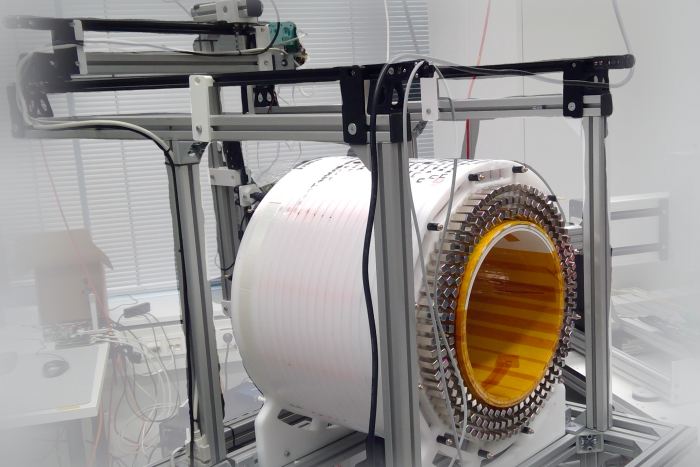
Over the years, magnetic resonance imaging (MRI) has advanced primarily through ever stronger magnetic fields. Higher field strengths improve signal quality and thus enable sharper images and greater diagnostic accuracy. However, these so-called high-field MRI systems, which typically operate at 1.5 tesla or more, are expensive and depend on specialised infrastructure. In regions with limited resources in particular, their availability is therefore often restricted.
This is exactly where our Low-Field MRI Lab comes in. Low-field MRI operates at much lower field strengths of below 200 mT. Such systems do not require complex infrastructure like cryogenic cooling or an RF shielded room and can be built in a compact and mobile design. This allows them to overcome the central hurdles of high-field MRI:
- significantly lower acquisition and operating costs
- Use without special rooms or building services
- mobile imaging directly at the patient's bedside or on site
- Access to MRI even in regions with limited resources
The central challenge is the weaker signal. We are working to improve the image quality of low-field MRI and to open up new fields of application.
Research Topics
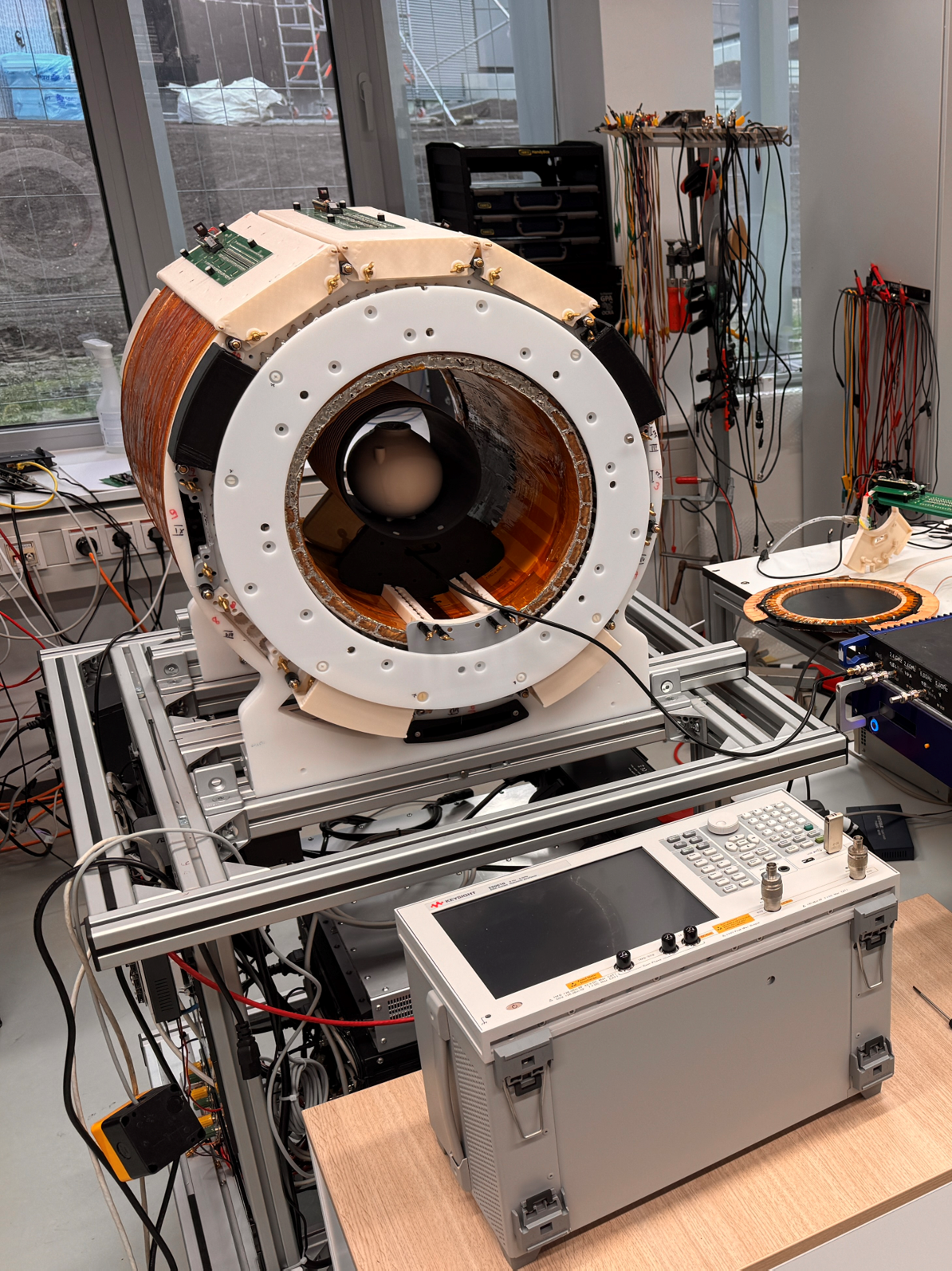
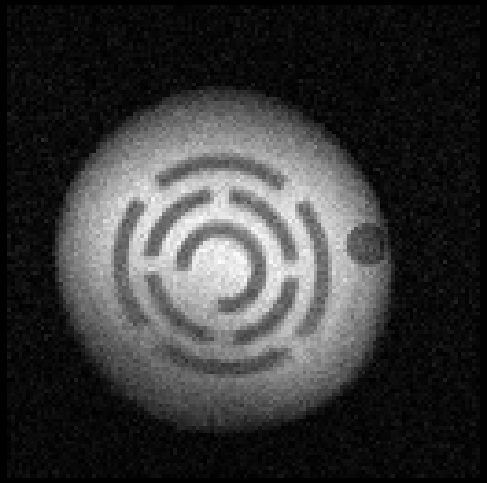
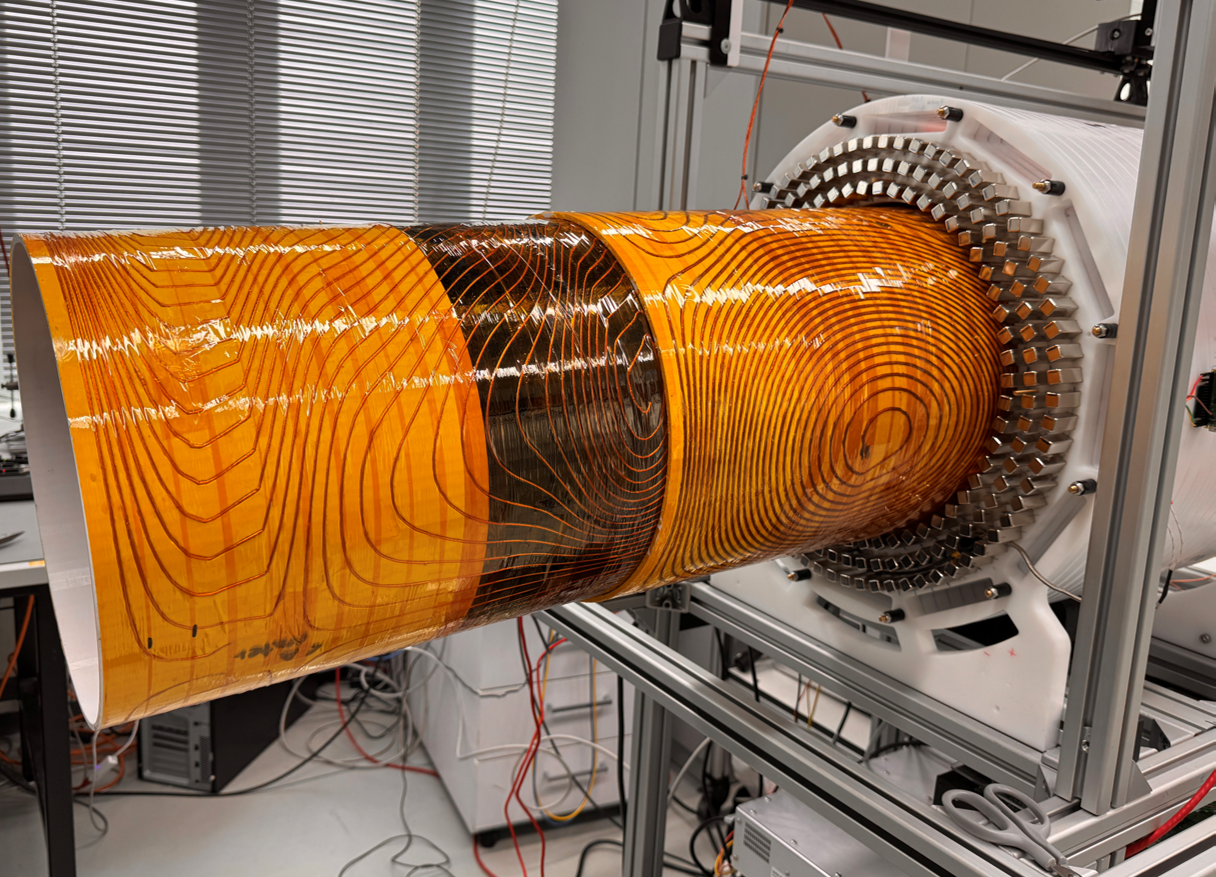
In our Low-Field MRI Lab, we research and develop along the entire low-field MRI chain, from mechanics and electronics to image reconstruction. Hardware and software, optimization methods and AI-based algorithms interlock across all topic areas. We develop innovative concepts and new fields of application in close collaboration with Fraunhofer MEVIS and the international open-source community.
Innovatives Magnetdesign
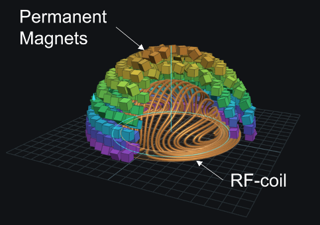
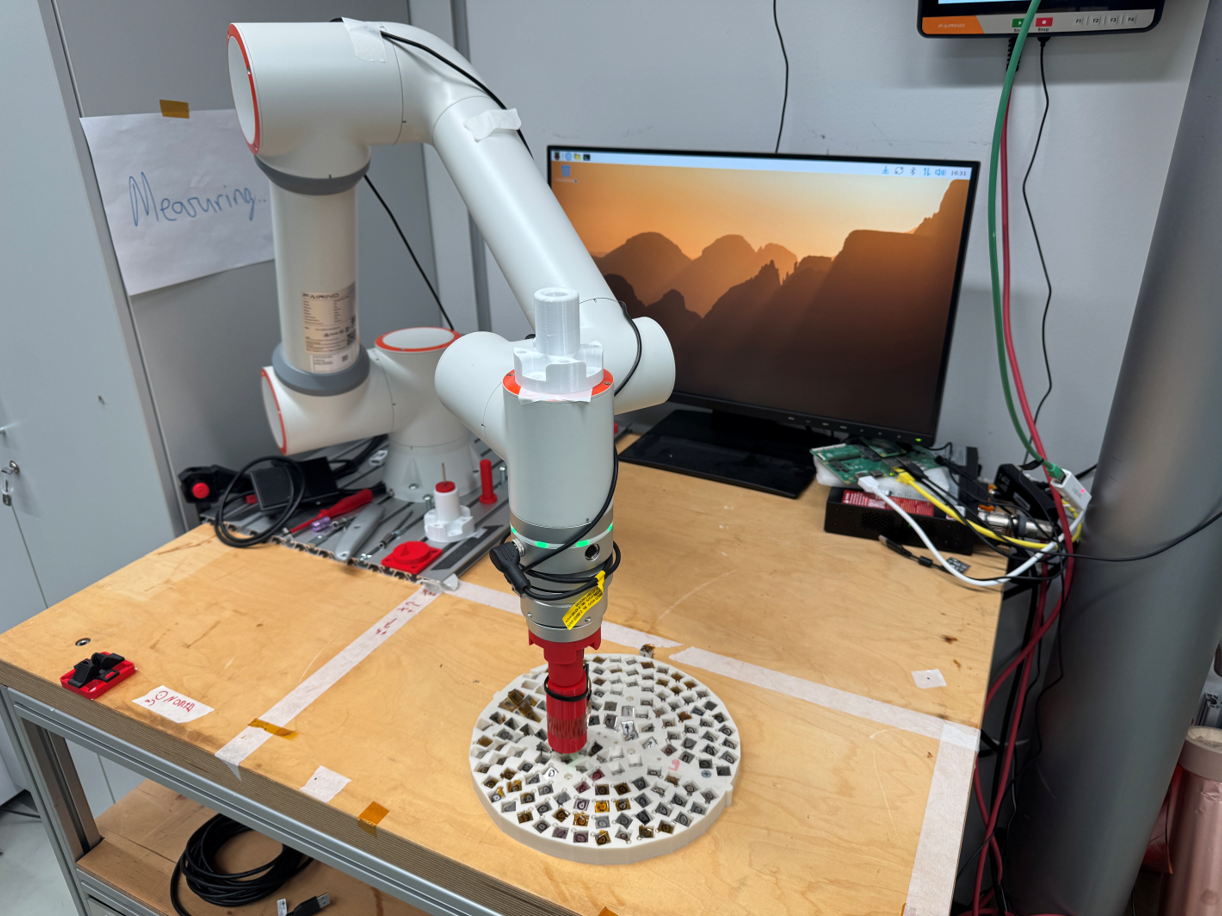
In this research area we develop new methods for designing static magnetic fields and gradient fields using resistive coils and permanent magnets. Optimised magnet configurations such as Halbach arrays and adaptive shielding allow us to achieve greater field homogeneity, stability and cost efficiency – decisive factors for the performance of LF-MRI systems. Robot-assisted automation ensures manufacturing quality; the measurement data feed directly back into our simulation environment and enable closed-loop optimisation.
Electronics and Sensor Technology
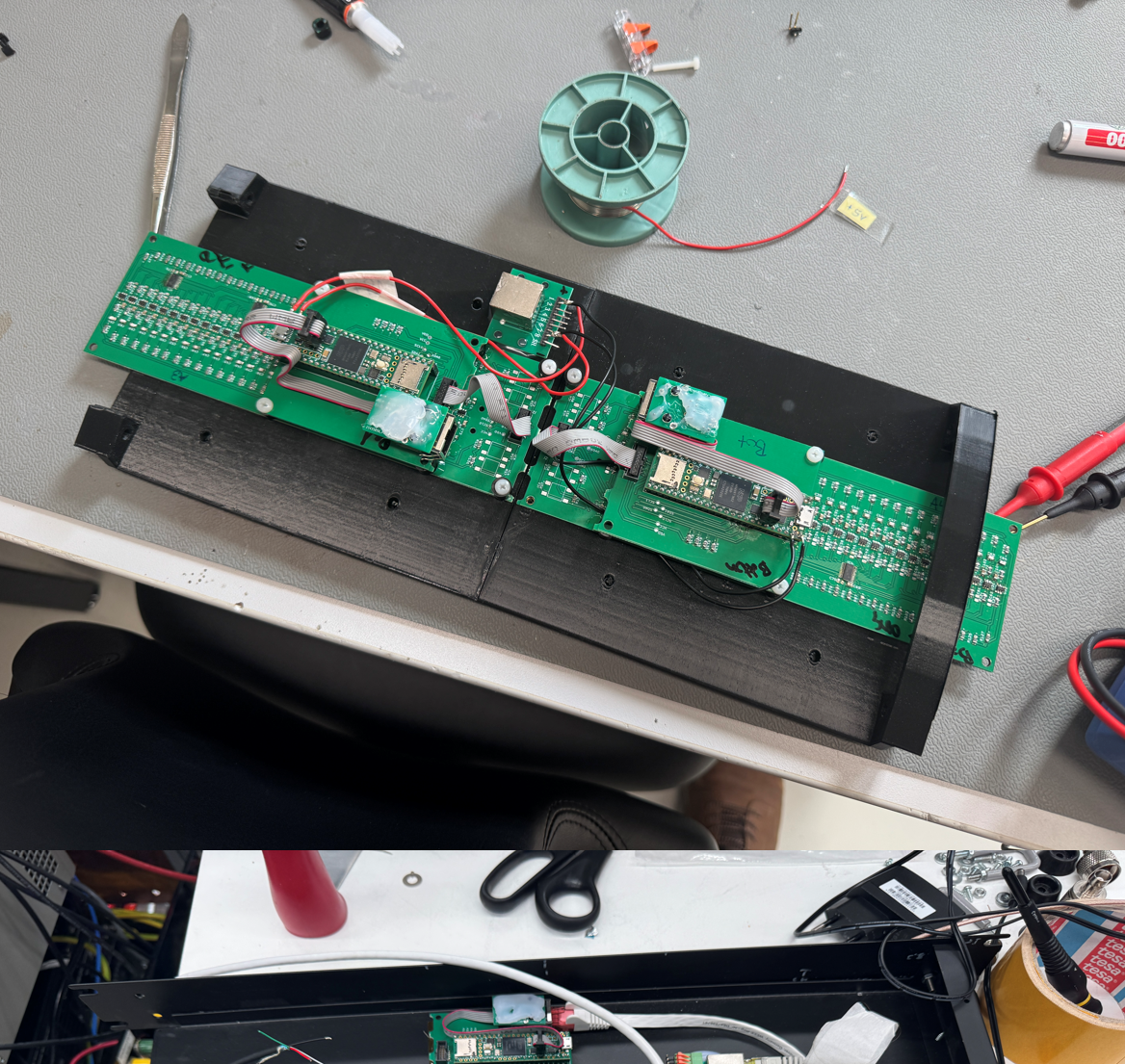
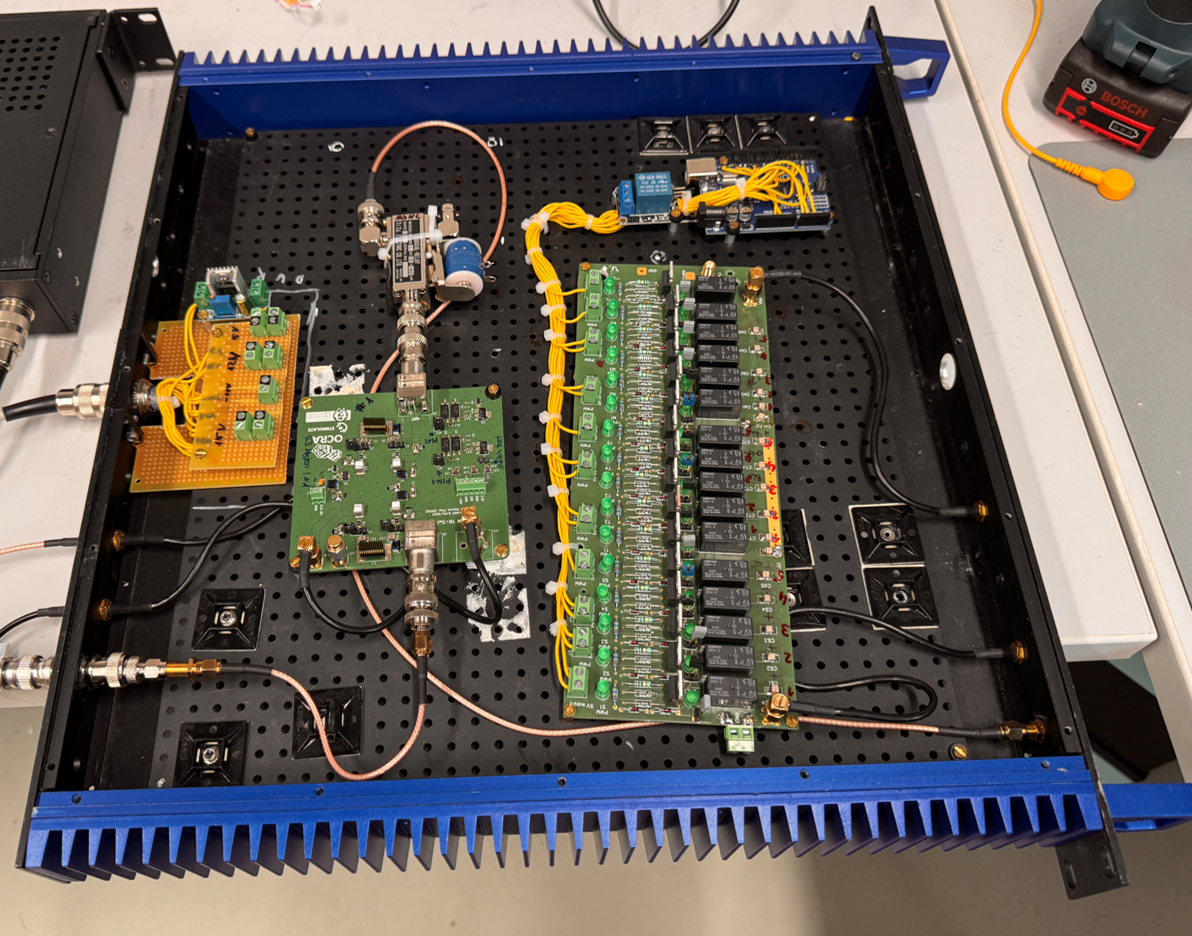
The image quality of an MRI system depends substantially on its electronics. The atomic nuclei in the body emit only a very weak radio signal, which is weaker still at low field strengths. In addition, the field of permanent magnets changes with temperature, and with it the resonance frequency of the nuclei. We therefore develop low-noise receive chains with preamplifiers and transmit/receive switches, as well as Hall sensors that continuously measure the magnetic field. Based on these readings, the Larmor frequency is automatically tracked during image acquisition.
Neue Bildgebungsverfahren
We investigate innovative imaging methods, in particular the design of pulse sequences, in order to exploit the full potential of LF-MRI. These techniques reduce off-resonance effects and the specific absorption rate (SAR), thus enabling more flexible and more precise imaging. Lung tissue, cardiac structures and regions close to metallic implants can thereby be depicted better – a clear gain in diagnostic possibilities. We place particular emphasis on highly specialised MRI sequences for screening applications.
Signal Modeling with Machine Learning and Physical Models
By combining artificial intelligence with physics-based models, we improve signal processing in LF-MRI. Machine learning algorithms, for example for universal noise suppression, compensate for the low signal-to-noise ratio (SNR) and enable faster, clearer and more reliable imaging. This makes LF-MRI a competitive and robust tool for medical diagnostics.
And much more
Are you interested in our research or would you like to work with us? Please get in touch – you will find the contact persons at Contact.
Projects

DeLoRI
Dedicated Low-field MRI for Breast
A low-field MRI system designed specifically for breast cancer screening, intended to make early detection affordable and widely available.
Im Projekt DeLoRI (Dedicated Low-field MRI for breast) we are developing a low-field MRI system tailored specifically to (breast) cancer screening. The project aims to demonstrate the potential that low-field MRI offers for early detection and diagnosis – especially for medically underserved populations. By combining modern technologies with innovative methods, we want to rethink medical imaging and pave the way towards more inclusive, more accessible and more effective healthcare.
Thesis Topics
We offer numerous theses across the entire development chain of low-field MRI. Depending on your profile, the work can focus on magnetic systems, electronics and firmware development or characterisation – or on software development, data analysis and algorithm development.
You will find an overview of all current openings here..
Partners
Contact

Dr.rer.nat.
Group Leader “Low-Field MRI Lab”
Ansprechperson „allgemein“

M.Sc.
Ansprechperson „Hardware“

M.Sc.
Ansprechperson „Software“
Ausgewählte Publikationen
- Lavronenko K., Ochsendorf M., Thull J., Schulz V. (2025). Differentiable Dipole-Based Optimization of Permanent Magnets for Homogeneous B0 Fields in Low-Field MRI. Magnetic Resonance Materials in Physics, Biology and Medicine, 38(Suppl. 1), S1–S889. Book of Abstracts, ESMRMB 2025, 41st Annual Scientific Meeting, 8.–11. Oktober 2025. https://doi.org/10.1007/s10334-025-01278-8
- Ochsendorf M., Lavronenko K., Schulz V. (2025). Nonlinear Model-Based B0 Field Compensation in Low-Field MRI Using Hall Sensor Arrays and Spatial Interpolation. Magnetic Resonance Materials in Physics, Biology and Medicine, 38(Suppl. 1), S1–S889. Book of Abstracts, ESMRMB 2025, 41st Annual Scientific Meeting, 8.–11. Oktober 2025. https://doi.org/10.1007/s10334-025-01278-8
- Lavronenko K., Yilmaz R., Chen Z., Stegmaier J., Schulz V. (2026). Atlas-Augmented Semantic Segmentation for Robust Ultra-Low-Field Pediatric Brain Imaging. In: Lepore N., Linguraru M. G. (Hrsg.), Low Field Pediatric Brain Magnetic Resonance Image Segmentation and Quality Assurance. LISA 2025. Lecture Notes in Computer Science, Bd. 16411. Springer, Cham. https://doi.org/10.1007/978-3-032-14417-1_8
- Ochsendorf M., Keunecke S. C., Hüsing M., Corves B., Schulz V. (2027). Modular Piggyboard-Based Segmented IC Architecture for Deterministic Multi-Sensor Integration in Mechatronic Systems. In: Nguyen V. L., Nguyen P. D., Quang Hoang N., Carbone G. (Hrsg.), Robotics and Mechatronics. ISRM 2026. Mechanisms and Machine Science, Bd. 213. Springer, Cham. https://doi.org/10.1007/978-3-032-29469-2_17