Research
Automatic Detection of Stress Indicators in Laboratory Animals Based on Video Recordings
Motivation
Many types of animal experiments need to be assessed in terms of severity, where the burden of the experiment on the animals is classified into different levels. This determination of the burden placed on animals by experiments (severity assessment) is an essential aspect of animal experimentation. In order to develop, validate and implement new, evidence-based methods for this purpose, the DFG research group FOR 2591 has been founded. Within this group, the LfB performs tasks in image and video based analysis of data.
Scientific Questions
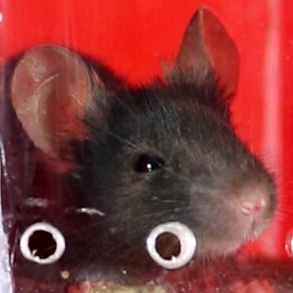
The aim of the project is to develop and validate markers for animal stress. In addition to a variety of clinical markers (laboratory values, vital signs), visual assessment is playing an increasingly important role. One example is the Mouse Grimace Scale (MGS) method, in which changes in the facial features of mice allow conclusions to be drawn about their stress. Visual assessment has significant advantages, including that it can be performed with simple training in everyday life, does not require special measuring equipment, and is noninvasive. These advantages are offset by the high time required for collection and reporting of findings. In addition, visual findings are partially dependent on the person making the assessment and are therefore subjective. In order to eliminate these problems, the LfB is developing an automatic method for determining the MGS as part of the project. Neural networks for animal detection, behavior analysis and MGS determination will be developed and trained with images judged by experts. The goal is fully automated MGS classification without significant human assistance.
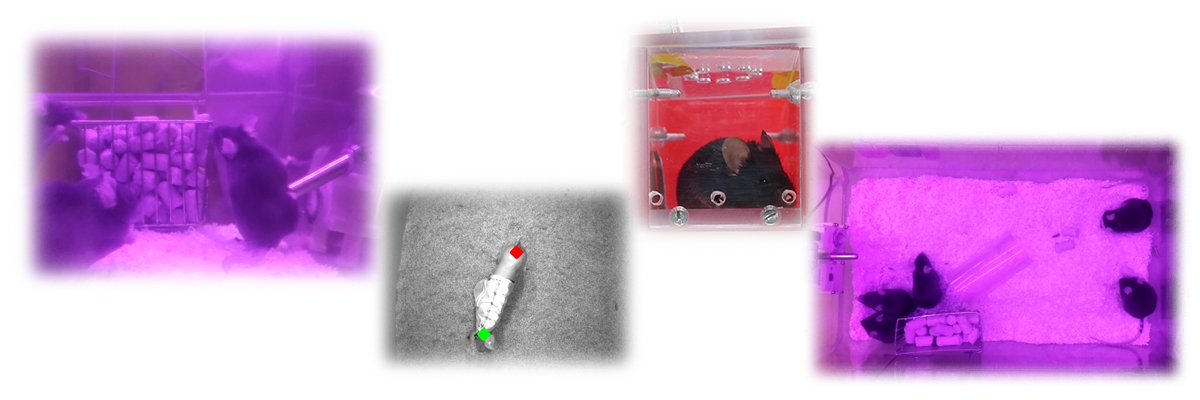
Video-based behavioral analysis in the home cage is also being explored as a major focus. The home cage is the cage that the animals inhabit during the experiments. Here, behavior can be observed without interference from humans or experiments. For this purpose, a special cage attachment is being developed within the research group, which is equipped with a variety of cameras in the visible, near-infrared and thermal spectral range. This system will be used to detect and track the animals, to study their social behavior and to examine various vital parameters such as heart and respiration rate. The LfB is responsible for detection, identification, tracking, social analysis and MGS scoring in the cages. Here, too, current developments in machine learning are used in the methodological development in order to be able to analyze the complex data reliably.
Partners
- Prof. Dr. André Bleich, Institute for Laboratory Animal Science, Hannover Medical School
- Prof. Dr. René H. Tolba, Institute for Laboratory Animal Science, University Hospital Aachen
- Prof. Dr. Brigitte Vollmar, Rudolf Zenker Institute for Experimental Surgery, University of Rostock
- Prof. Dr. Kerstin Schwabe, Department of Neurosurgery, Hannover Medical School
- Dr.-Ing. Carina Barbosa Pereira, Department of Anesthesiology, University Hospital Aachen
- Prof. Dr. Michael Czaplik, Department of Anesthesiology, University Hospital Aachen
- Dr. Christine Häger, Institute for Laboratory Animal Science, Hannover Medical School
- Prof. Dr. Fabian Kiessling, Institute for Experimental Molecular Imaging, University Hospital Aachen
- Prof. Dr. Felix Mottaghy, Department of Nuclear Medicine, University Hospital Aachen
- Prof. Dr. Marion Bankstahl, Institute for Laboratory Animal Science, Hannover Medical School
- Dr. Paulin Jirkof, Department of Animal Welfare and 3R, University of Zurich
- Prof. Dr. Peter Gass, Central Institute of Mental Health (ZI), Mannheim
- Prof. Dr. Lars Lewejohann, Institute of Animal Welfare, Animal Behavior and Laboratory Animal Science, Freie Universität Berlin
- Prof. Dr. Ute Lindauer, Department of Neurosurgery, University Hospital Aachen
- Prof. Dr. Heidrun Potschka, Faculty of Veterinary Medicine: Institute of Pharmacology, Toxicology and Pharmacy, Ludwig Maximilian University of Munich
- Prof. Dr. Thomas Thum, Fraunhofer Institute for Toxicology and Experimental Medicine ITEM, Hannover
External Funding
- DFG Research Unit FOR 2591, „Severity assessment in animal-based research“, Project No. 321137804
- DFG Research Grant, "Automatic Detection of Stress Indicators in Laboratory Mice Using Video Recordings"; Project No. 408132301
Contact

Publications

Computation of Traveled Distance of Pigs in an Open Field With Fully Convolutional Neural Networks
In: Bildverarbeitung fuer die Medizin (BVM), Springer

Post-operative severity assessment in sheep

A Model-Specific Simplification of the Mouse Grimace Scale Based on the Pain Response of Intraperitoneal CCl4 Injections
In: Scientific Reports