
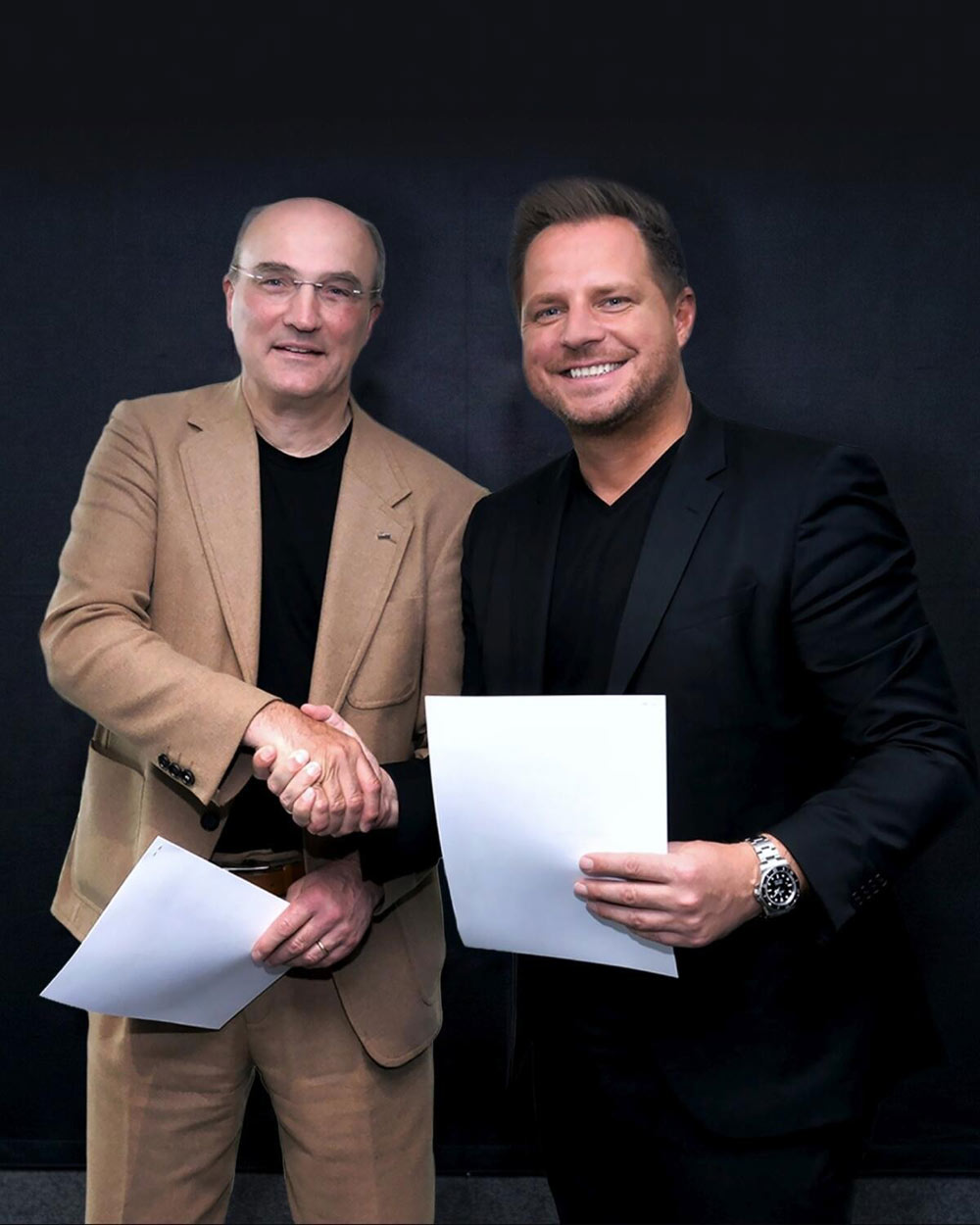

“The partnership with NEURA Robotics and the creation of NEURA Gym RWTH Aachen at the heart of RWTH Aachen University take our technology transfer strategy to a new level,” explains Prof. Dr. Ulrich Rüdiger, Rector of RWTH. “RWTH has a decades-long tradition of technological excellence in mechanical engineering, electrical engineering, and computer science. By combining this leading academic role with an industry pioneer across nearly 3,000 square meters, we are creating a unique infrastructure for tomorrow’s talent and securing Germany’s competitive edge in the global AI race.”
David Reger, Founder and CEO of NEURA Robotics, emphasizes the importance of the new location: “With NEURA Gym RWTH Aachen, we are expanding our global network of physical AI training centers by adding a critical site. Each gym feeds its training data via the Neuraverse into a shared intelligence layer that benefits our entire robot fleet. With every new location, the entire network becomes smarter. By uniting RWTH’s technological excellence with our own, we are bridging cutting-edge research and entrepreneurial execution to anchor Europe’s technological sovereignty in a pivotal next-generation technology.”
The scientific backbone of this pioneering strategic alliance rests on the combined expertise of two leading RWTH institutes: the Institute of Imaging and Computer Vision and the Institute of Mechanism Theory, Machine Dynamics and Robotics. As the initiator of the alliance, Professor Volkmar Schulz, Head of the Institute of Imaging and Computer Vision, emphasizes its strategic relevance: “At my institute, we pursue the strategic goal of advancing physical AI (Embodied AI) by seamlessly linking cognition and physics. Building on our years of research, we design perceptive, physics-based foundation models as the core cognitive element for future generations of robotics. A primary field of application is healthcare: from precision medical technology and imaging to daily clinical workflows and nursing care, robotic assistants can significantly relieve staff and improve patient safety. Within NEURA Gym RWTH Aachen, we are creating the scaling infrastructure needed to apply our theoretical models directly to NEURA Robotics’ advanced platforms. This allows us to build autonomous systems that anticipate and understand their environment based on physical principles—ensuring inherently safe operation.”
Professor Burkhard Corves, Head of the Institute of Mechanism Theory, Machine Dynamics and Robotics (IGMR), highlights the role of kinematics, dynamics and the integration of NEURA robots into complex systems: “Safe, intuitive interaction between robots and humans—as well as among multiple robots—is essential for cognitive robots to deliver real-world value. Leveraging our expertise in motion planning, execution, kinematics, and dynamics, we optimize these interactions and build fully integrated robotic systems, all grounded in intuitive, safe, human-like robot movement. Building on this, our research at NEURA Gym RWTH Aachen focuses on two key areas: robotic disassembly for the circular economy, and human-robot interaction, particularly for individuals with disabilities. To achieve this, we develop precise motion strategies, kinematic and dynamic models, robotic hands, and safety concepts.”
A Cross-Industry Platform Bridging Research and Application
NEURA Gym RWTH Aachen bridges top-level academic research and commercial application across diverse industries. Spanning nearly 3,000 square meters, corporations as well as small and medium-sized enterprises (SMEs) gain access to a unique infrastructure to integrate high-end robotics into existing production processes without financial risk.
A key element of this collaboration is NEURA Robotics’ full-service model, which ensures seamless operation. This includes the professional installation and maintenance of the IT infrastructure, provision of computing capacity for complex AI models, and exclusive access to the Neuraverse ecosystem. This technological foundation enables the seamless integration of research data and the efficient use of standardized robot control interfaces.
As a central hub for innovation, the site enables close collaboration between students, doctoral candidates, and industry experts to jointly shape the future of physical AI. This synergy yields valuable benefits for core sectors such as manufacturing, automotive, the circular economy, and medical technology. To accelerate research across robotics, medicine, and production, around 20 RWTH Aachen University institutes will be directly integrated into NEURA Gym RWTH Aachen as part of this partnership.
