Research
Mechanistic Interpretability for Large Neural Networks
Motivation
Despite the growing use of ever larger and more powerful machine learning models in real-world applications, our understanding of how these models work internally remains alarmingly limited. This lack of understanding is a particular challenge in safety-critical scenarios, where trust in the reliability of the models is essential, and it makes unpredictable or undesirable behaviour hard to anticipate or correct.
Mechanistic interpretability offers a promising solution to this problem. By reverse engineering the algorithms that neural networks use, this approach aims to uncover human-understandable mechanisms behind their capabilities. By analysing the weights and activations of neural networks, mechanistic interpretability seeks to identify the circuits responsible for particular behaviours and thus provides deeper insight into how these models work [Cammarata et al., 2020, Elhage et al., 2021].
Scientific Questions
We investigate the reasoning processes of models in two of the most promising areas: computer vision and language models.
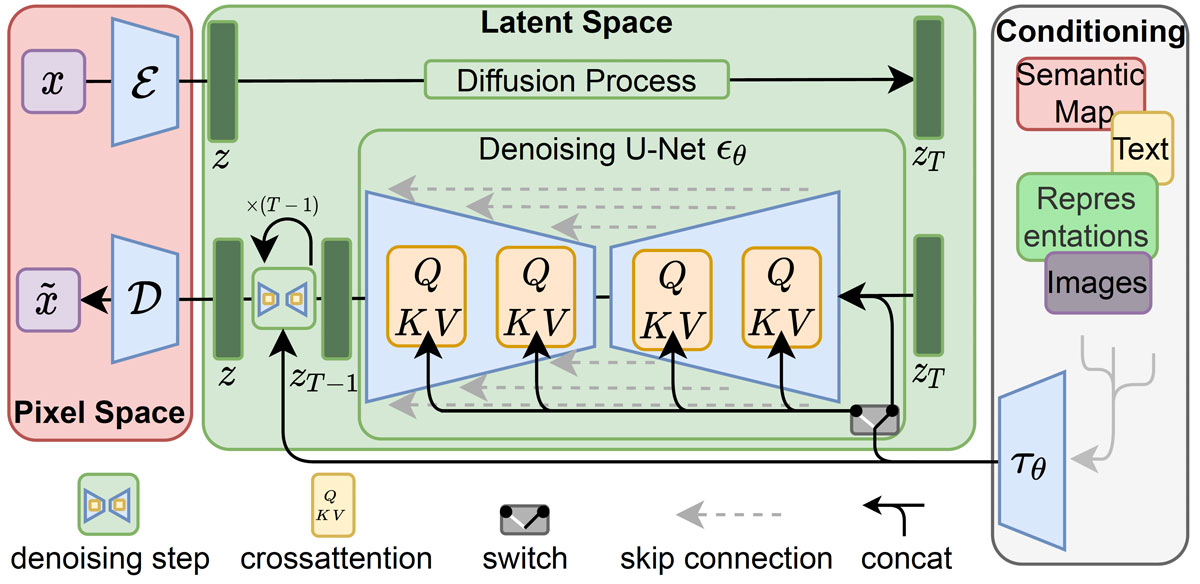
In computer vision we focus on investigating the cross-attention mechanism in order to better understand how text-to-image generation works. Our aim is to uncover the underlying processes of this mechanism, in particular with regard to the problem of hallucinations in large vision-language models (VLMs).
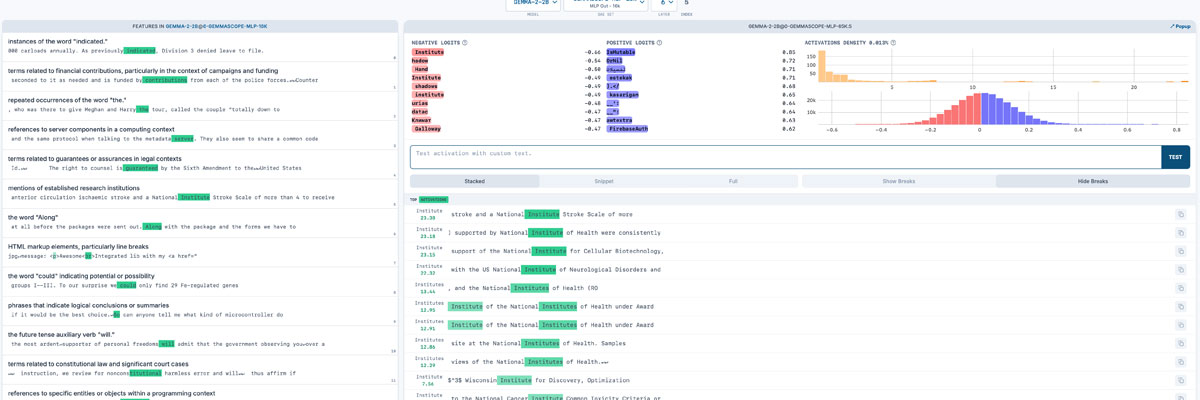
In the area of language models we want to understand how large language models (LLMs) work by using sparse autoencoders. This approach allows us to explore the underlying mechanisms that govern the behaviour and reasoning processes of LLMs.
Thesis Topics
New theses in the area of mechanistic interpretability for large neural networks are advertised regularly. In line with the project description above, this project contains several sub-problems that make interesting topics for bachelor's and master's theses and can be discussed in a personal meeting.
Partners
- Qihui Feng, M.Sc., Knowledge-based Systems Group, Information Systems and Databases (Computer Science 5), RWTH Aachen University
- Yongli Mou M.Sc., Information Systems and Databases (Computer Science 5), RWTH Aachen University